Fly Fishing — Belize
Fly Fishing Belize:
Permit, Bonefish, and Tarpon on the Flats
Fly fishing in Belize means permit, bonefish, and tarpon on the flats of Ambergris Caye. Honest seasonal windows, gear specs, and what a Grand Slam day takes.
A World-Class Fishery with Room to Breathe
The Mesoamerican Barrier Reef runs 190 miles along the Belizean coast. Behind it sit hundreds of square miles of productive flats, most of them lightly fished. Belize has never seen the volume of visiting anglers that cycles through the Bahamas or the Florida Keys each season, and the mandatory catch-and-release legislation enacted in 2009 for bonefish, permit, and tarpon has allowed populations to hold and recover. You are not fishing water that has been ground down by traffic.
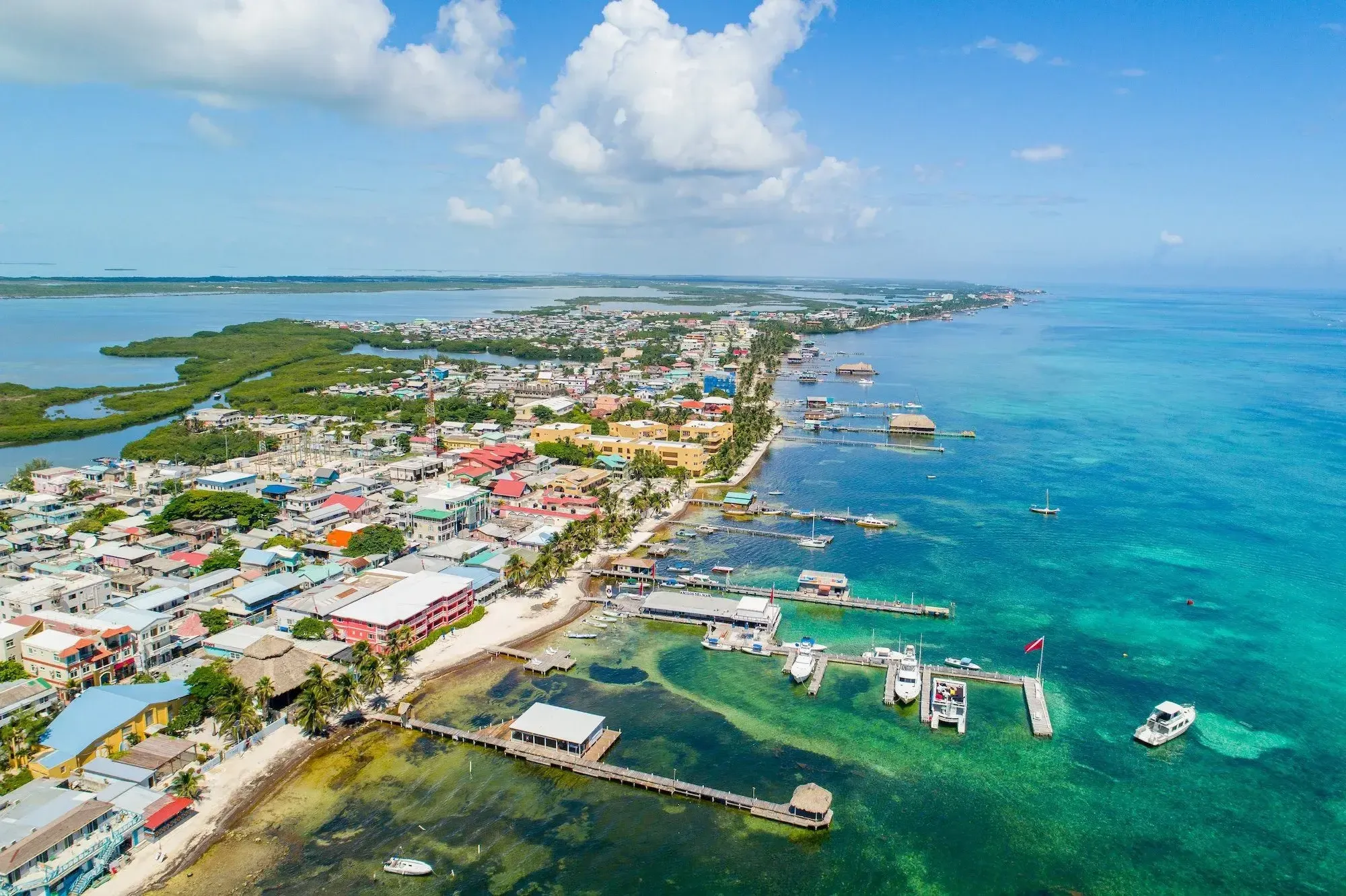
San Pedro, on the northern tip of Ambergris Caye, is the primary base. Productive permit and bonefish flats start within a few minutes of the dock, with the reef accessible the same morning. Few bases in the Caribbean compress that much fishable water into a single day's reach. For a full picture of what Belize offers across all three fishing styles, see the guide to fishing in Belize.
The Species Worth the Trip
Belize's flats deliver all three primary saltwater fly fishing targets in numbers serious enough to plan around. Most Caribbean fisheries do one of them well. Belize does all three.
Bonefish
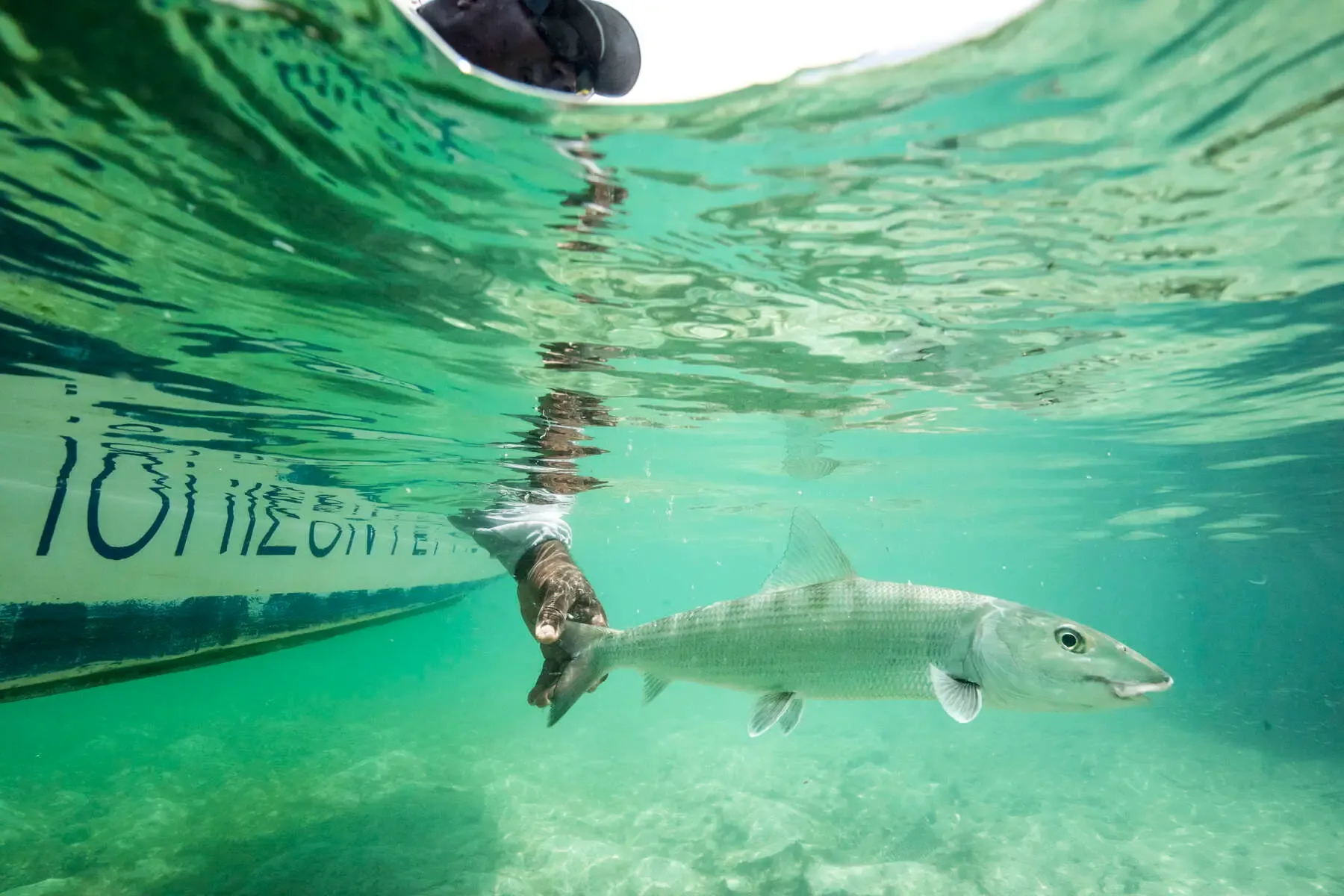
Bonefish are the most consistent target on the flats and a productive warm-up before the harder work of permit. They school across shallow sand and turtle grass, push visible wakes, and respond immediately to a correct presentation. An 8-weight floating line, a Gotcha or Crazy Charlie in size 4 to 6, and 10 to 12-pound fluorocarbon tippet cover most situations. Fish average 3 to 5 pounds, with larger singles available year-round. They will show you quickly whether your cast and strip are dialed in.
Permit
Permit are why serious fly anglers book Belize. The flats around Ambergris Caye hold some of the most consistent permit populations in the Caribbean, and the fish here are not small.
They tail and feed on crab in the same skinny water as bonefish, but the comparison ends there. A permit picks up leader shadow, reacts to the pressure wave of a rushed cast, and is gone before a second presentation is possible. The take window on a tailing fish is tight: you want the fly landing slightly ahead and to the side, a short strip to animate it, then a pause. Most permit that eat on a fly eat on that pause. Most do not eat at all.
A 10-weight with a size 2 to 4 EP Crab or Merkin and 16 to 20-pound fluorocarbon tippet is standard. Fish average 8 to 15 pounds on these flats, with 20-pound fish present in the better areas. Landing one is a legitimate achievement at any skill level.
Tarpon
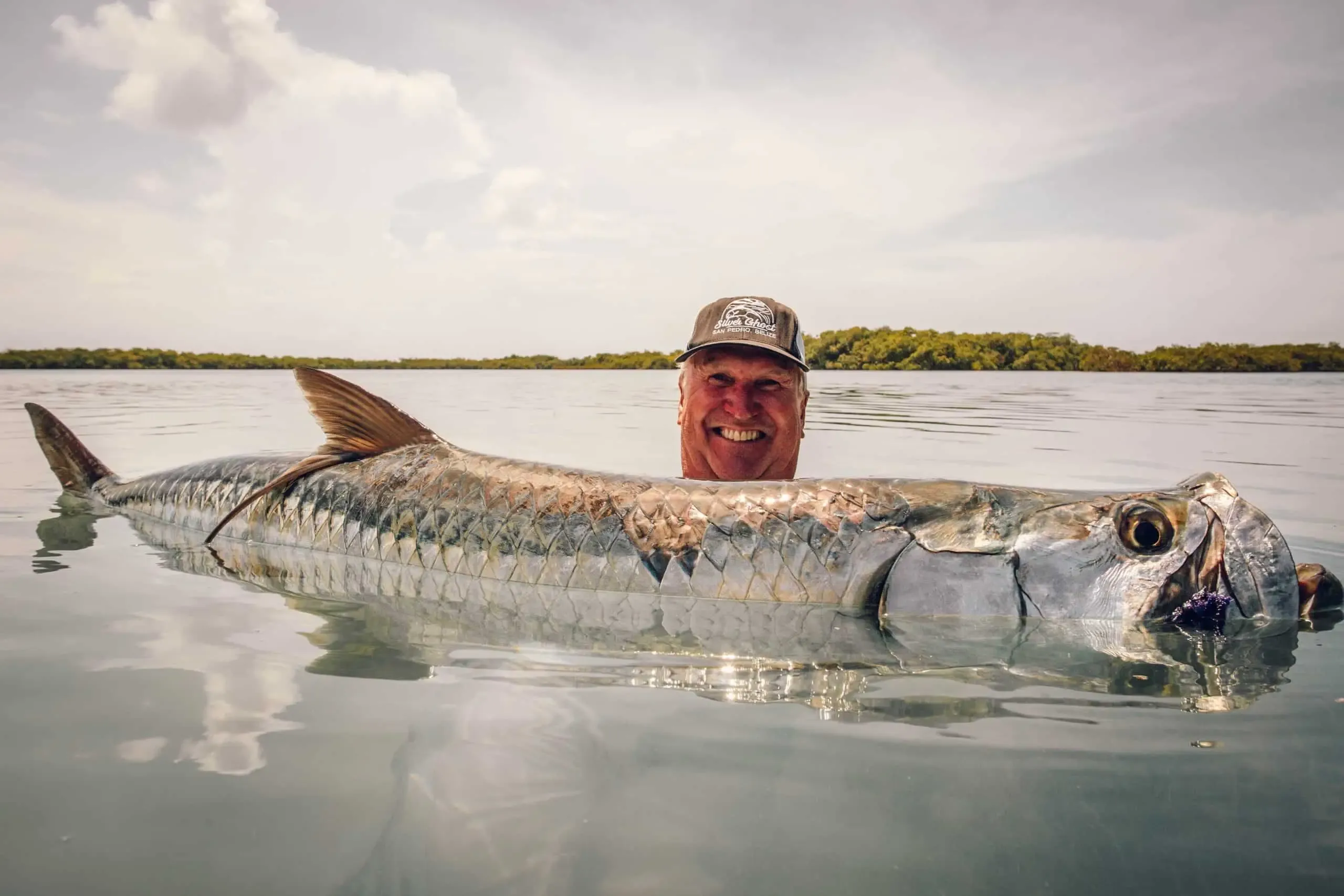
Tarpon are present in Ambergris Caye's lagoon systems and backcountry channels year-round. The largest fish arrive during the spring migration: April through June brings fish in the 80 to 120-pound class, in numbers. A 10 to 12-weight with a 40 to 50-pound fluorocarbon shock tippet is the right setup. Black Death and EP Tarpon patterns work. Landing rate on large tarpon is low regardless of skill level. That is part of the deal.
The Grand Slam, bonefish, permit, and tarpon on a fly in a single day, is achievable on the flats out of San Pedro. It requires the right tidal sequence, favorable light, and a guide who can move you between species efficiently. It does not happen every day. When it comes together, it is the kind of fishing that is genuinely hard to describe to anyone who has not been on the bow for it.
When to Be on the Flats
No single month is best for all three species. These windows apply to the San Pedro area.
| Species | Peak Season | Notes |
|---|---|---|
| Bonefish | October – April | Year-round; most consistent during calm, cooler months |
| Permit | March – September | Cold fronts December–February disrupt conditions |
| Tarpon | April – June | Migration peak; lagoon fish present year-round |
| Grand Slam | April – May | Best overlap window for all three species in a day |
Winter fronts push through from December to February. When they do, visibility drops and the flats go off. If permit are your primary target, spring is the window: stable weather, good numbers, and long fishing days.
Gear for Belizean Flats
Bonefish
8-weight fast-action rod, floating line, Gotcha or Crazy Charlie size 4-6, 10-12 lb fluorocarbon tippet
Permit
10-weight fast-action rod, floating line, EP Crab or Merkin size 2-4, 16-20 lb fluorocarbon tippet
Tarpon
10-12-weight rod, intermediate or floating line, Black Death or EP Tarpon pattern, 40-50 lb fluorocarbon shock tippet
On every trip
Polarized sunglasses with amber or copper lenses, a buff, long-sleeve sun shirt, reef-safe sunscreen
Fishing the Flats Out of San Pedro
We run from San Pedro, on the northern end of Ambergris Caye. The permit and bonefish flats sit a short run from the dock. There is no two-hour transit before the fishing starts.
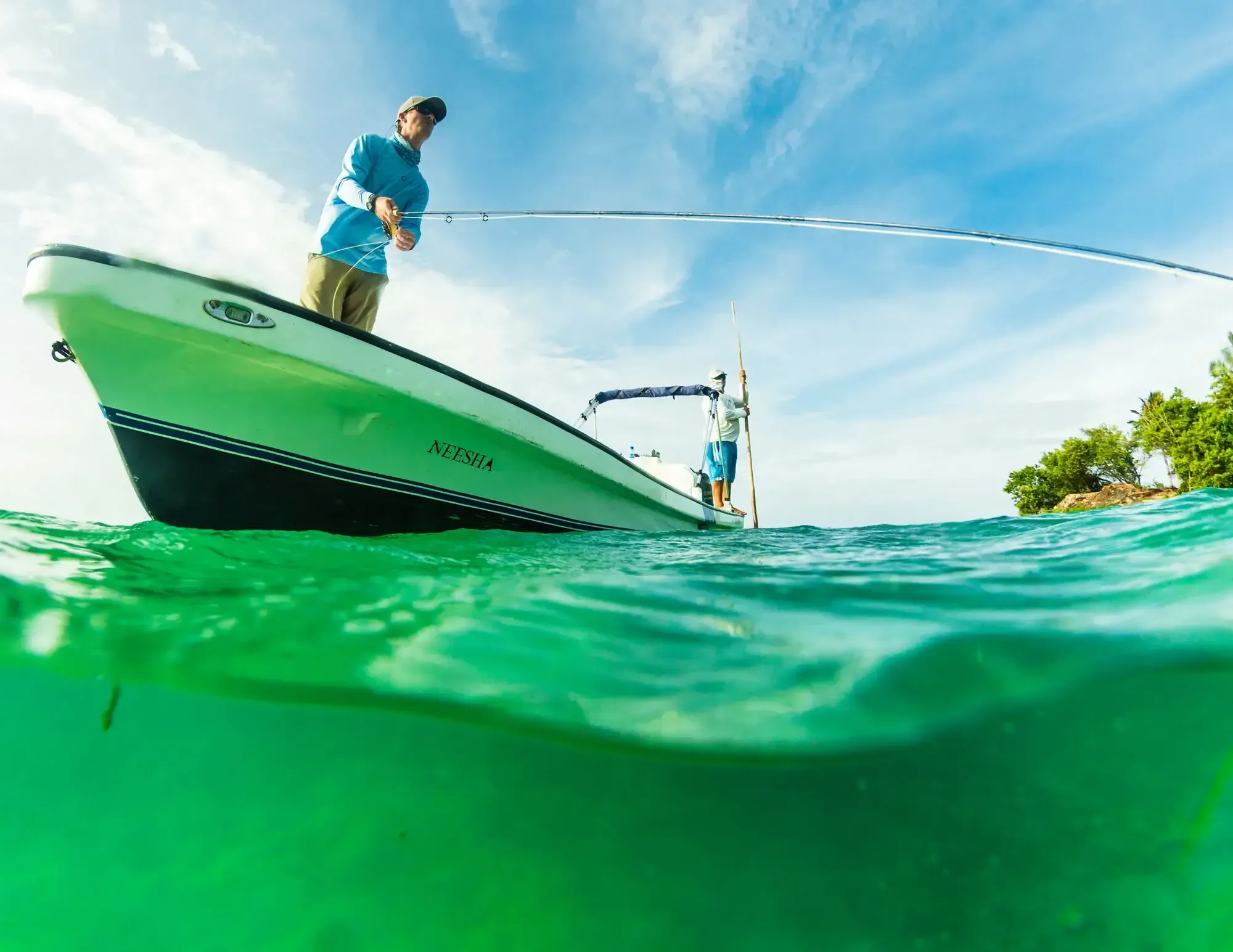
Flats days begin before sunrise to catch the first tidal window of the morning. Light and water clarity are at their best in the early hours, and permit feed most actively in those conditions. Depending on tide and target, a day might open on a permit flat, shift to bonefish through the mid-morning, and work tarpon channels before the afternoon wind builds. The guide sequences the day based on conditions. Your job is to be ready on the bow.
One or two anglers per skiff. Tackle, water, and a valid Belize fishing license are included. Shared boats are not part of how we operate.
What Anglers Say
I came to Belize specifically to target permit after hearing how consistent the fishery could be, and it absolutely delivered. We spent long days on the flats spotting tails and cruising fish, and my guide never stopped working to get me into position. I finally landed the biggest permit of my life on the second afternoon. Easily one of the most rewarding fish I've ever caught.
Thomas B.
Austin, Texas, USA
We completed a Grand Slam by early afternoon, something I honestly never expected would happen outside of television shows and magazines. Bonefish early in the morning, tarpon around the mangroves, and finally a permit late in the day on a shallow flat. The guide stayed calm the entire time and kept putting us in the right position. Truly world-class fly fishing.
Marc D.
Lyon, France
What stood out most was the professionalism of the guides. They communicated constantly, explained how the fish were moving with the weather, and adapted throughout the day instead of following the same routine. Even when the wind picked up, they still managed to find protected water with active fish. I learned more during this trip than during years of fly fishing elsewhere.
Oliver K.
Manchester, England
If you have a target species, specific dates, or want a straight answer on whether a Grand Slam attempt is realistic for your window, get in touch below. I fish these flats every week and can tell you exactly what to expect.
Frequently Asked Questions
Yes. Belize is one of the premier fly fishing destinations in the Caribbean. Extensive permit, bonefish, and tarpon flats run along the inside of the Mesoamerican Barrier Reef, and the mandatory catch-and-release legislation enacted in 2009 for all three species has kept populations strong. San Pedro, on Ambergris Caye, is the primary fly fishing base, with productive water a short run from the dock in multiple directions.
Ambergris Caye, particularly the flats north of San Pedro and the lagoon systems to the south, holds consistent bonefish year-round and is the most accessible base for visiting anglers. Turneffe Atoll, an offshore atoll east of the main reef, is also well-regarded for bonefish in less-pressured water. Both locations fish well; San Pedro is the practical choice for most trips given the logistics.
No. Bonefish are subject to mandatory catch-and-release under Belizean law, and keeping one is illegal. Beyond the legal requirement, bonefish are considered poor table fare: they are extremely bony, which is where the name comes from. On a guided charter, every bonefish goes back into the water.
In fishing, the 80/20 rule holds that roughly 20% of the water holds 80% of the fish. On a flat, this means that most of the visible water is empty most of the time, and fish concentrate in specific areas based on tide stage, water temperature, bottom structure, and current. A guide who has fished the same flats season after season knows which water to prioritize at which point in the tide. That local knowledge is often the difference between a productive day and a slow one.