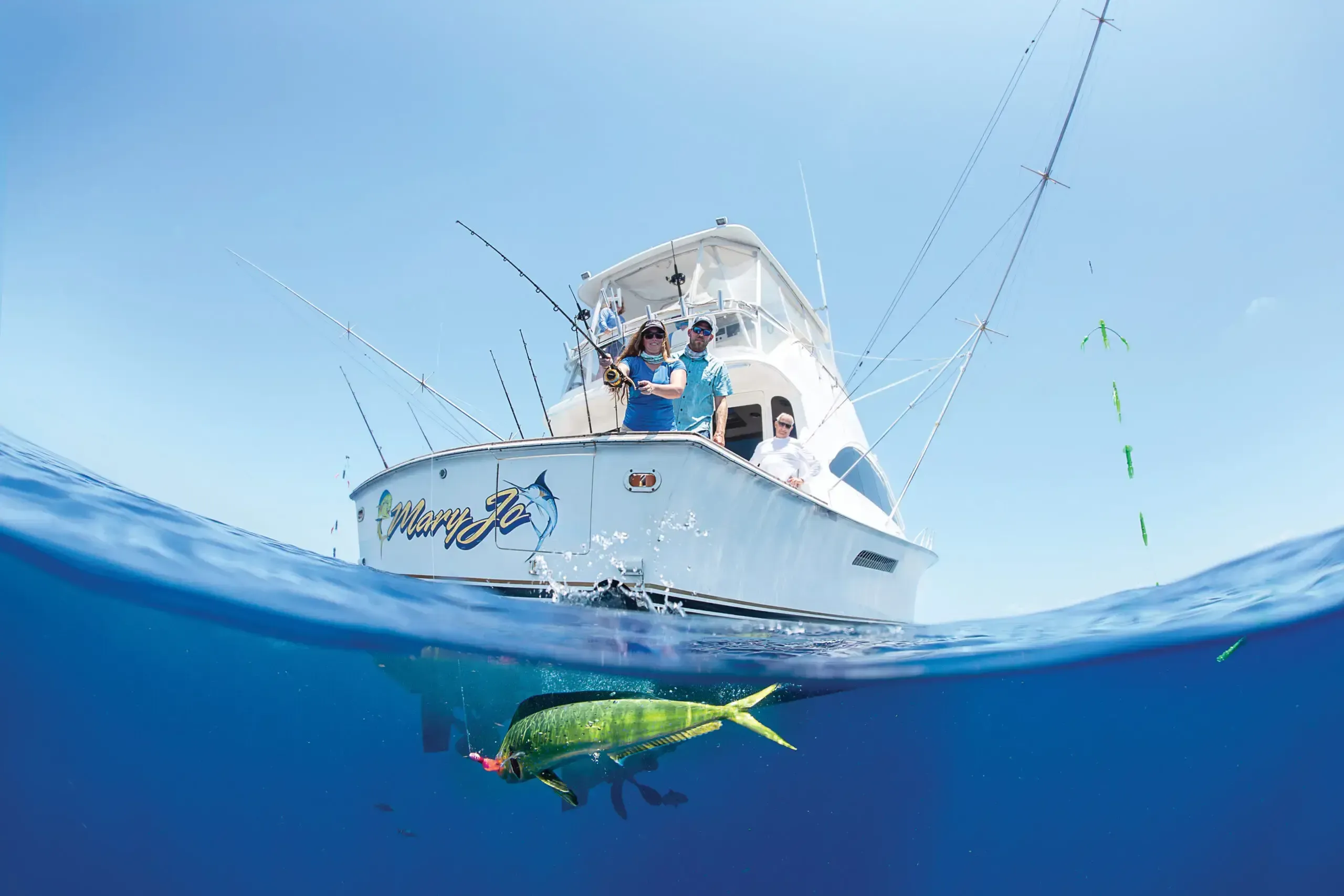
Offshore Fishing — Placencia, Belize
Fishing in Placencia, Belize:
Sailfish, Marlin, and the Flats
Placencia is Belize's offshore capital. Sailfish and marlin from November to March, permit flats year-round, and the best big-game water in the country.
Belize's Offshore Capital
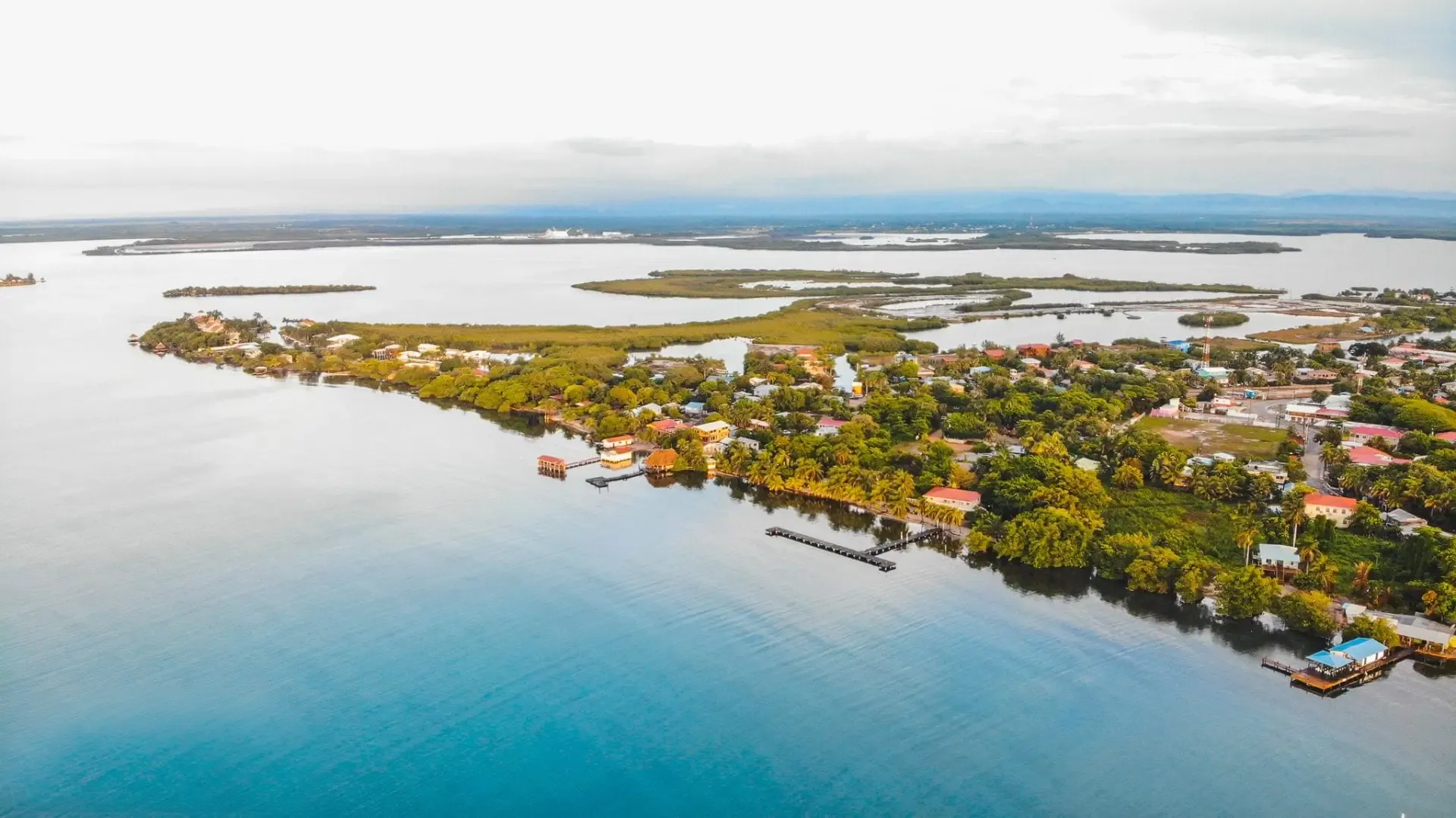
The Placencia Peninsula sits at the southern end of Belize's coastline, where the Caribbean shelf drops quickly into deep, open water. That geography defines what is available here. The drop-offs south of the peninsula hold the country's most productive sailfish and marlin water, and the captains working these grounds run them every day from November through March. This is not a location where offshore fishing competes with reef tours and snorkeling excursions for attention. It is a dedicated offshore base.
Most anglers who book a Placencia charter are not first-timers. They know the species, they understand the technique, and they have chosen Placencia specifically because the water is productive and the boats are not crowded on top of each other. That combination is harder to find than it looks.
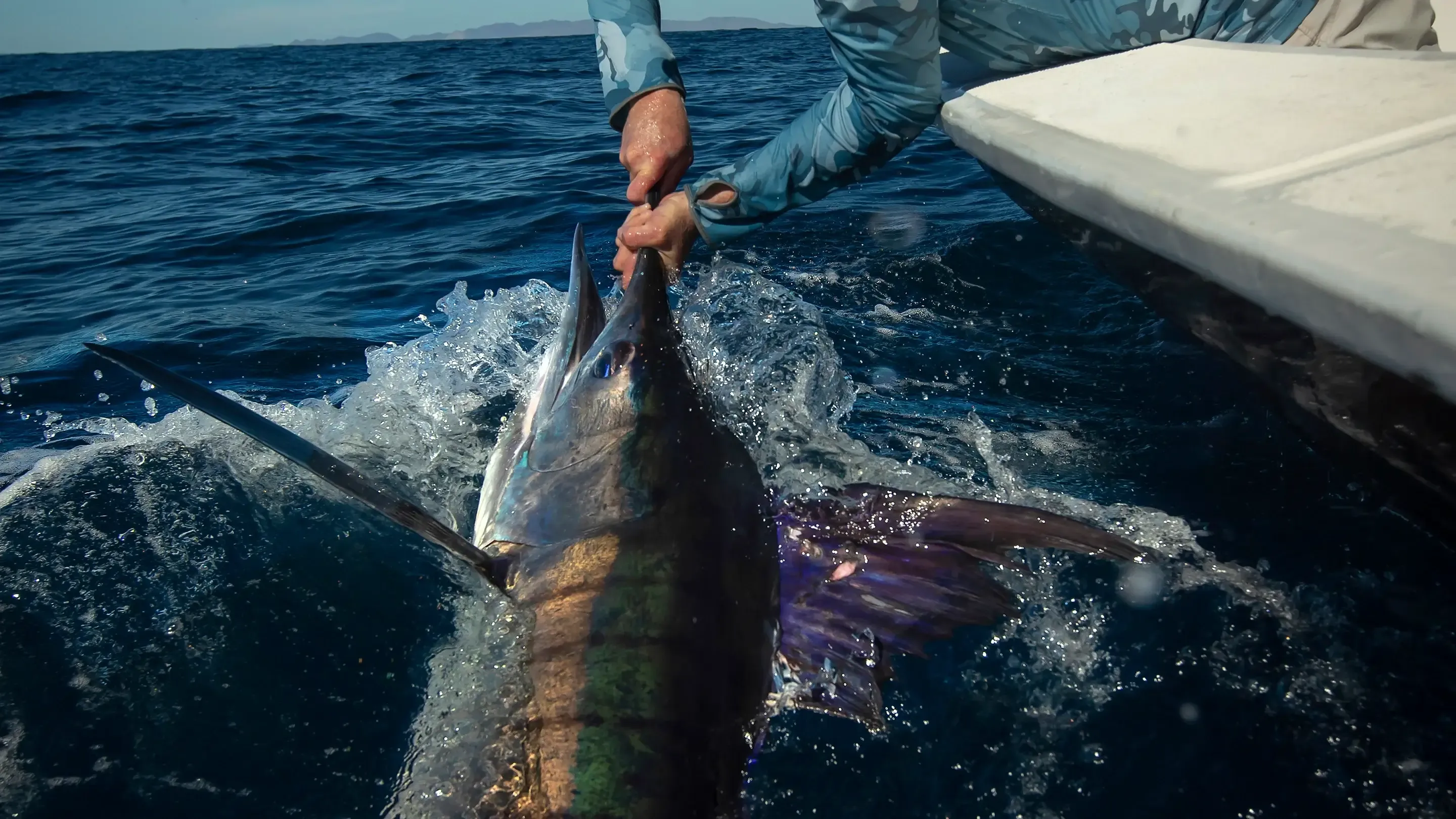
The Offshore Species
Sailfish
Sailfish are the draw, and November through March is the window. On a good morning, the captain raises a fish within the first few miles of the drop-off: a bill cutting through the spread, a lure disappearing, then 80 pounds of lit-up fish clearing the water on the strike. The presentation runs on teasers. The eat happens fast. The fight is short by offshore standards and complete: sailfish jump, run, and exhaust themselves in a way that lets an angler appreciate every second of it. Multiple fish in a day are realistic when the bait is stacked and the water is right. For the full picture of what Belize's offshore fishery looks like, see deep sea fishing in Belize.
All sailfish are released. This is not a sentiment. It is the standard practice on a serious offshore boat.
Blue Marlin
Blue marlin require a different approach. They move through the same offshore water as sailfish but less predictably, and targeting them means adjusting the spread, reading different depth and temperature structure, and committing to a day that may produce one fish or a long conversation about where to look next. When a blue marlin takes a trolled lure, everything scales up: the hookset, the first run, the duration, the physical cost. A fish above 300 pounds is in a different category from anything else available in Caribbean sport fishing.
Wahoo
Wahoo are consistent from November into February and reliable across the year at lower concentrations. They hit a trolled lure with a speed that loads the rod before the angler has processed what happened. Fish average 20 to 40 pounds out of Placencia, with larger specimens possible. They are among the finest eating fish in the sea, and a productive offshore day here often combines billfish releases with wahoo that go straight into the box.
Dorado
Dorado are the most visually striking fish in this fishery: deep blue-green flanks, yellow fins, a profile unlike anything else in the water. They gather around weed lines, floating debris, and current edges — structure the captain reads constantly through the run. Finding a productive weed line means finding the school, and one hookup tends to trigger the others. They are available year-round and the most reliable consistent catch on any offshore day regardless of what the sailfish are doing.
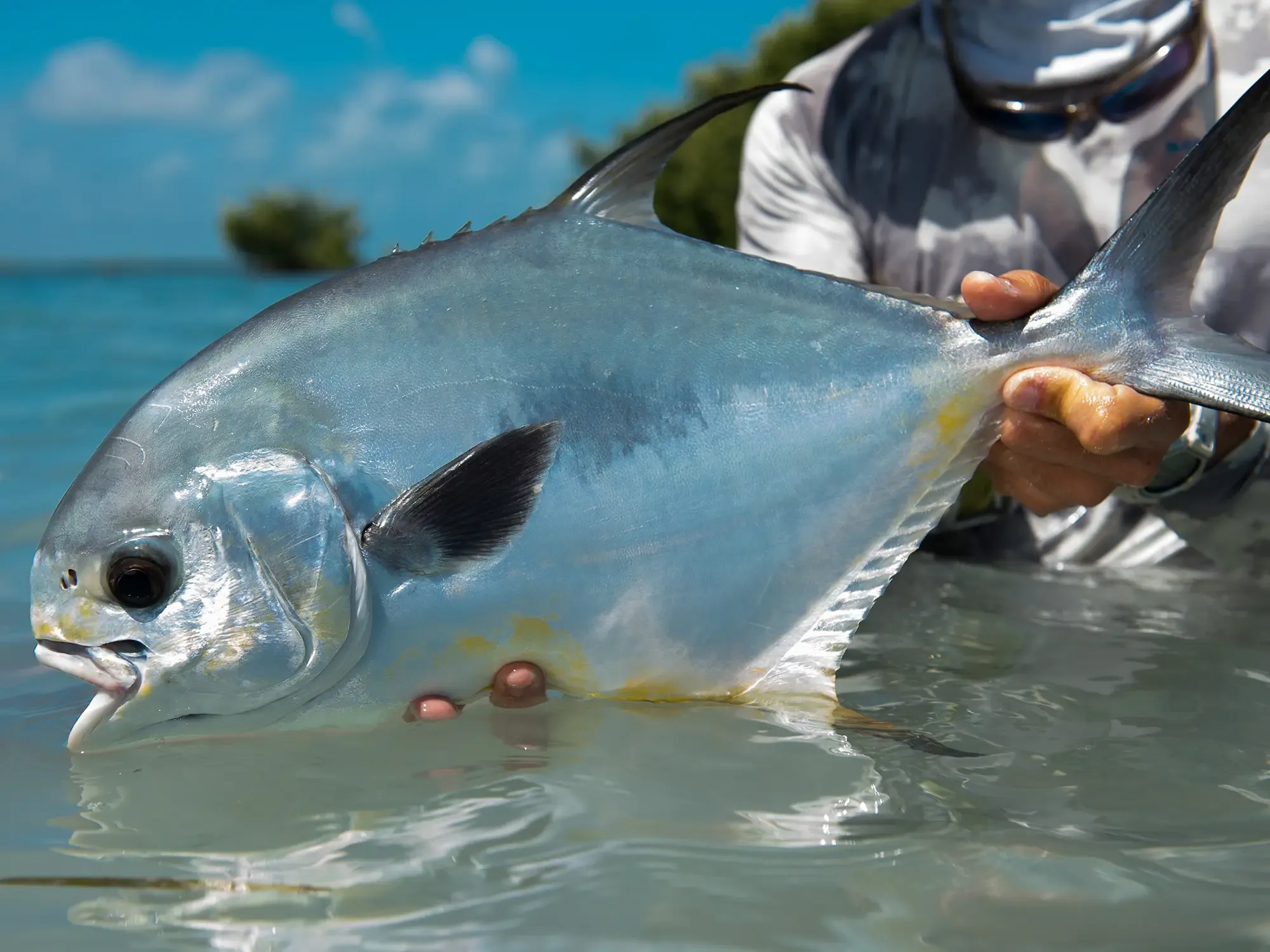
Fly Fishing the Placencia Flats
Permit
are the primary fly target. The flats near Placencia are shallow enough to wade in many sections, with tailing fish regularly visible in a foot of water. Singles and small schools are both present. The fish are not pressured, which does not make them easier to catch but does change the character of the experience.
Bonefish
hold on the sandy and turtle grass flats alongside the permit water. They school in numbers, average 3 to 5 pounds, and are a productive way to build confidence and calibrate the cast before moving to harder targets.
Tarpon
use the river mouths, lagoon systems, and backcountry channels behind the peninsula year-round. The spring migration pushes large fish through from April into June. This is legitimate, underused tarpon water.
When to Fish Out of Placencia
The offshore and flats seasons each have their own peak. Both fisheries are available from the same base, but the best window for one does not always align with the best window for the other.
| Species | Peak Season | Notes |
|---|---|---|
| Sailfish | November – March | Primary offshore season; cooler water concentrates fish on the drop-offs |
| Blue Marlin | Year-round | Winter produces more encounters; always present offshore |
| Wahoo | November – February | Aligns with sailfish season; year-round at lower concentrations |
| Dorado | Year-round | Best around weed lines; productive all months |
| Permit | March – September | Best on stable, sunny days; cold fronts disrupt flats conditions |
| Bonefish | October – April | Year-round; most consistent in cooler months |
| Tarpon | April – June | Migration peak; lagoon fish present year-round |
The overlap window that serves both fisheries well is late March through early April: the offshore continues on wahoo and dorado while the permit flats and tarpon channels are coming into form. For the complete Belize seasonal picture, see the guide to fishing in Belize.
Planning a Trip to Placencia
Placencia is a 45-minute domestic flight from Belize City on Tropic Air or Maya Island Air. The alternative is a four-hour drive south through the Hummingbird Highway. It is more remote than San Pedro, and that is a direct reason why the offshore grounds here are not crowded: the anglers who arrive came specifically to fish.
Offshore trips run full days, eight to ten hours on the water. The captain reads conditions each morning and builds the day around what the water is doing: bait marks, current lines, temperature breaks, weed fields. Your job is to be ready and to fight what comes up.
Most serious offshore anglers book a minimum of two days to justify the transit and maximize time on the fish. For those combining offshore with a day on the flats, both fisheries are accessible from the same base. Tackle and licensing are handled by the operator.
What Anglers Say
We booked three consecutive days offshore out of Placencia and every single day produced something different. Sailfish on day one, tuna and mahi on day two, reef fishing mixed with trolling on the final day. The crews were punctual, knowledgeable, and genuinely enjoyable to spend time with. Worth every bit of the trip south.
Peter W.
Sydney, Australia
At first I hesitated about making the extra trip down to Placencia, but after seeing the fishing grounds I understood immediately why people recommend it. Less pressure, beautiful water, and some of the most consistent offshore action I've experienced anywhere in the Caribbean. The entire experience felt authentic and far less crowded than larger destinations.
Henrik L.
Copenhagen, Denmark
If you are planning an offshore trip to Placencia and want to talk through timing, target species, or how to structure multiple days on the water, get in touch below.
Frequently Asked Questions
Placencia is the best offshore fishing base in Belize. The sailfish and marlin water runs south of the peninsula, where the Caribbean shelf drops quickly and baitfish stack along the contours during the winter months. Wahoo and dorado are available year-round. The flats west of the peninsula also hold permit, bonefish, and tarpon for anglers who want to combine both fisheries from a single base.
For offshore fishing, November through March is the primary window, with December and January producing the highest sailfish concentrations. For a combination of offshore and flats, late February through early March is strong: the billfishing is still productive and the permit water to the west is coming into form. April brings the tarpon migration and stable flats conditions if you have already had your offshore days.
If you are coming for offshore fishing or want a more remote Belizean experience, yes. The transit from Belize City is longer than San Pedro, a 45-minute domestic flight or a four-hour drive south, but the offshore grounds are productive, the town is uncrowded, and the boats are not stacked on top of each other. It is not the right base if fly fishing the flats is your only goal; San Pedro handles that better.
Yes. Visiting anglers are welcome to fish in Belize with a valid Belize fishing license, which is mandatory for all recreational fishing in Belizean waters. On a guided charter, the license is included in the price. The only restrictions that apply to all anglers, local and visiting alike, are mandatory catch-and-release for bonefish, permit, and tarpon, and the prohibition on keeping billfish.