Fishing — San Pedro, Ambergris Caye
Fishing in San Pedro, Belize:
Flats, Reef, and Offshore
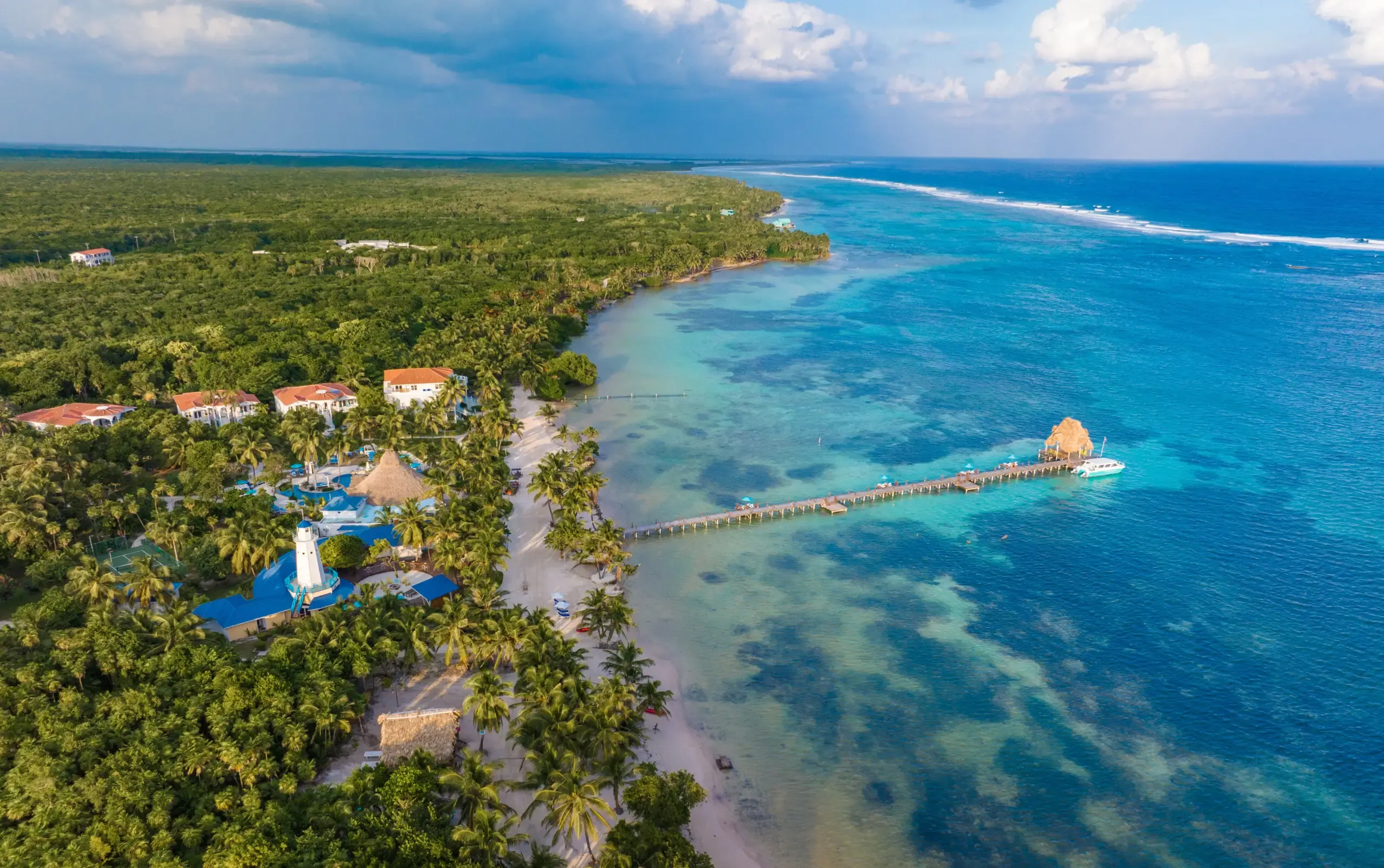
San Pedro, Ambergris Caye sits inside the world's second-largest barrier reef. Fly fishing, reef fishing, and offshore charters from one base.
An Island Inside the World's Second-Largest Barrier Reef
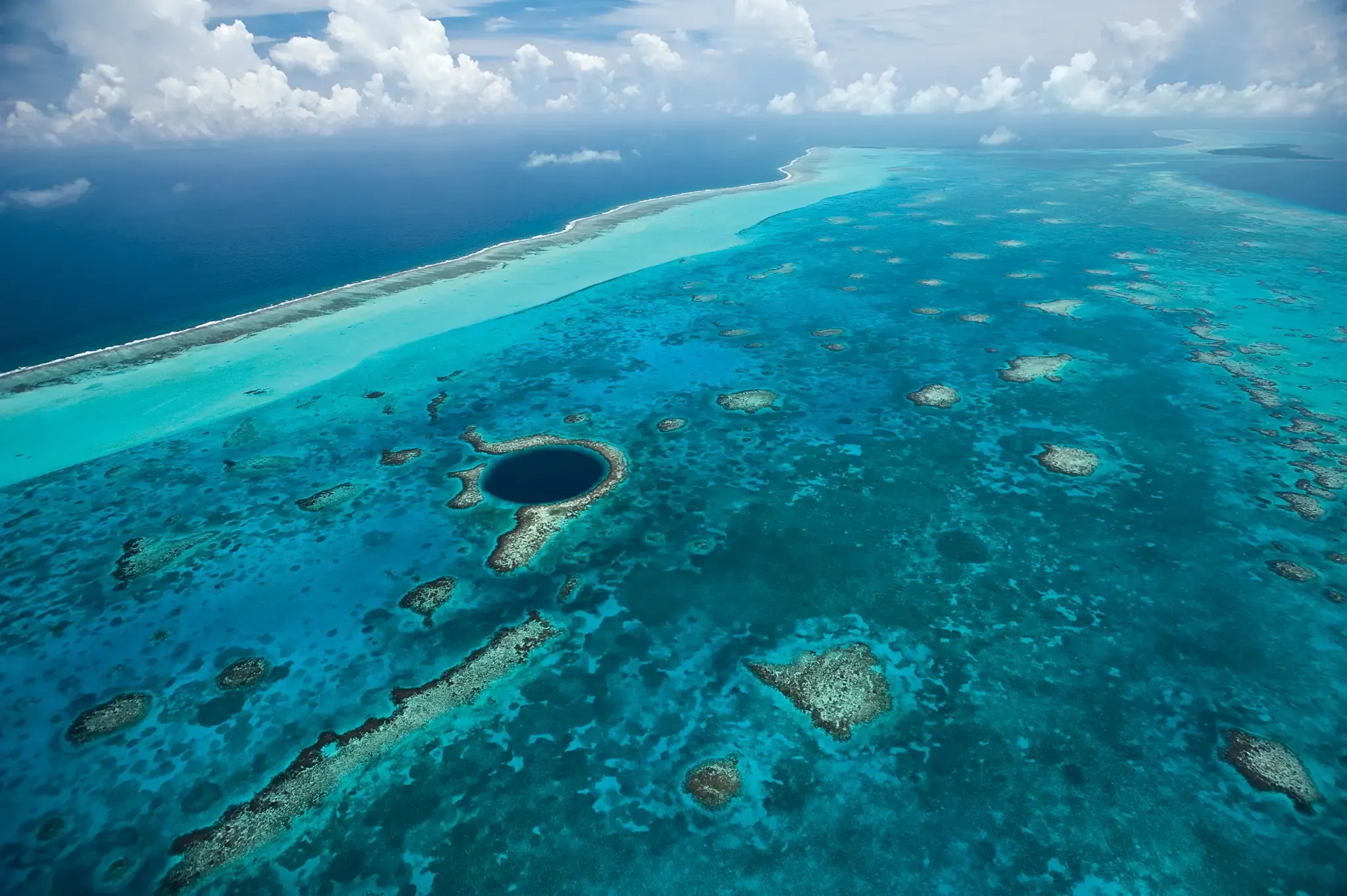
San Pedro sits on the northern end of Ambergris Caye, a long, narrow island positioned inside the Mesoamerican Barrier Reef, the second-largest barrier reef system in the world. That geography is the fishing. Productive bonefish and permit flats extend north and south of the island, sitting in two to six feet of water a short run from the dock. The reef lies just beyond, with snapper and grouper working the coral structure year-round. Open Caribbean water begins a brief run past the reef edge.
No other base in Belize puts all three environments within reach of the same morning. Most visiting anglers come specifically for the flats. The ones who stay more than a day usually fish the reef too.
Fly Fishing the Flats of Ambergris Caye
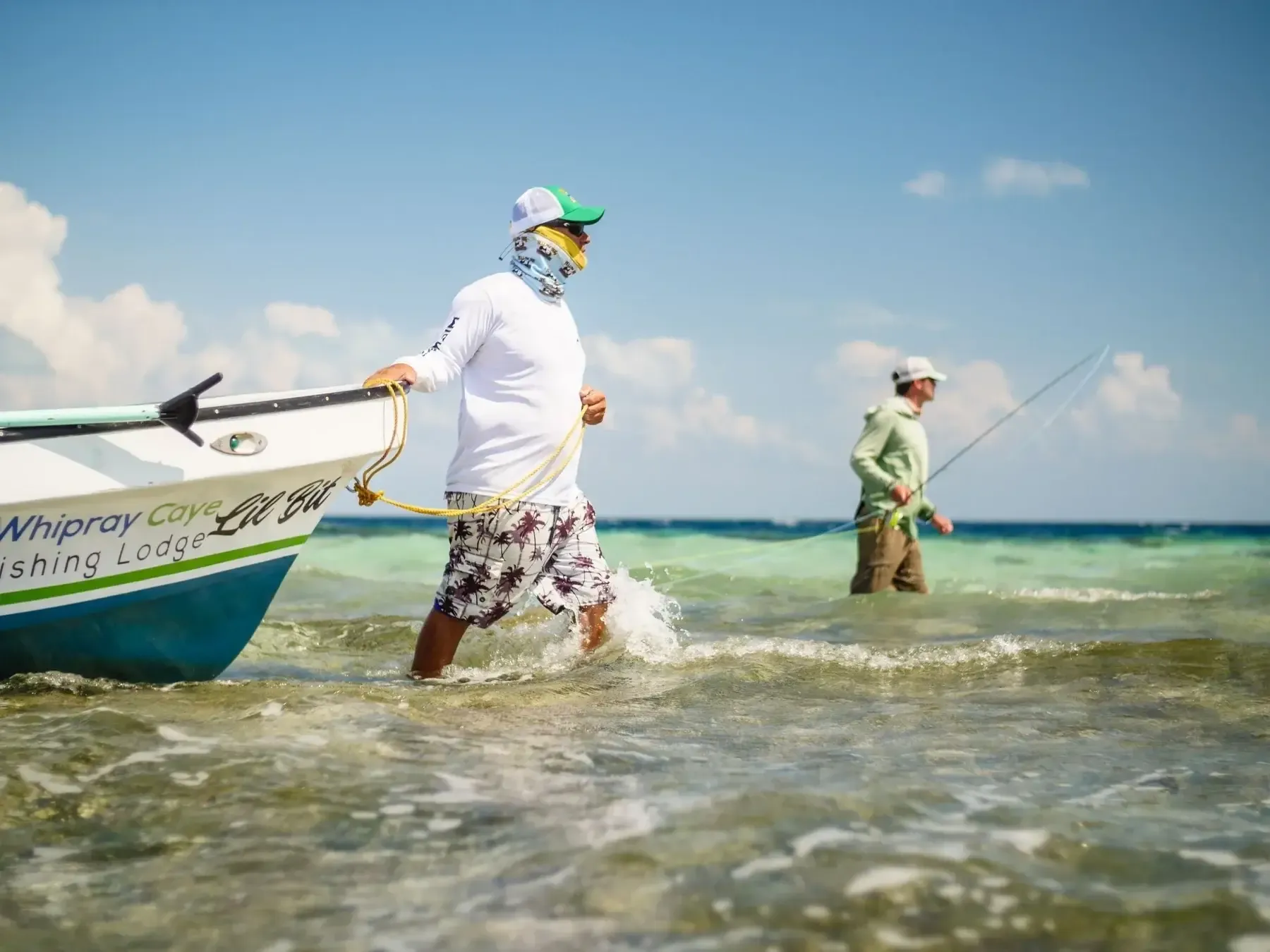
The flats fishing is why San Pedro appears on the bucket lists of serious fly anglers. The flats to the north, along with the backcountry channels and lagoon systems south of town, hold consistent populations of bonefish, permit, and tarpon.
Bonefish school across the shallow sand and turtle grass flats, running 3 to 5 pounds on average with larger fish available year-round. Permit tail on the same water: harder to locate, selective in the extreme, and worth every cast that falls short. Tarpon hold in the lagoon channels behind the island and show up in large numbers during the spring migration. Landing all three in a single day, the Belize Grand Slam, is a realistic goal on these flats, not a marketing phrase.
For the full species breakdown, gear specifications, and what a Grand Slam attempt actually requires on the water, see the fly fishing in Belize guide.
Reef Fishing the Barrier Reef
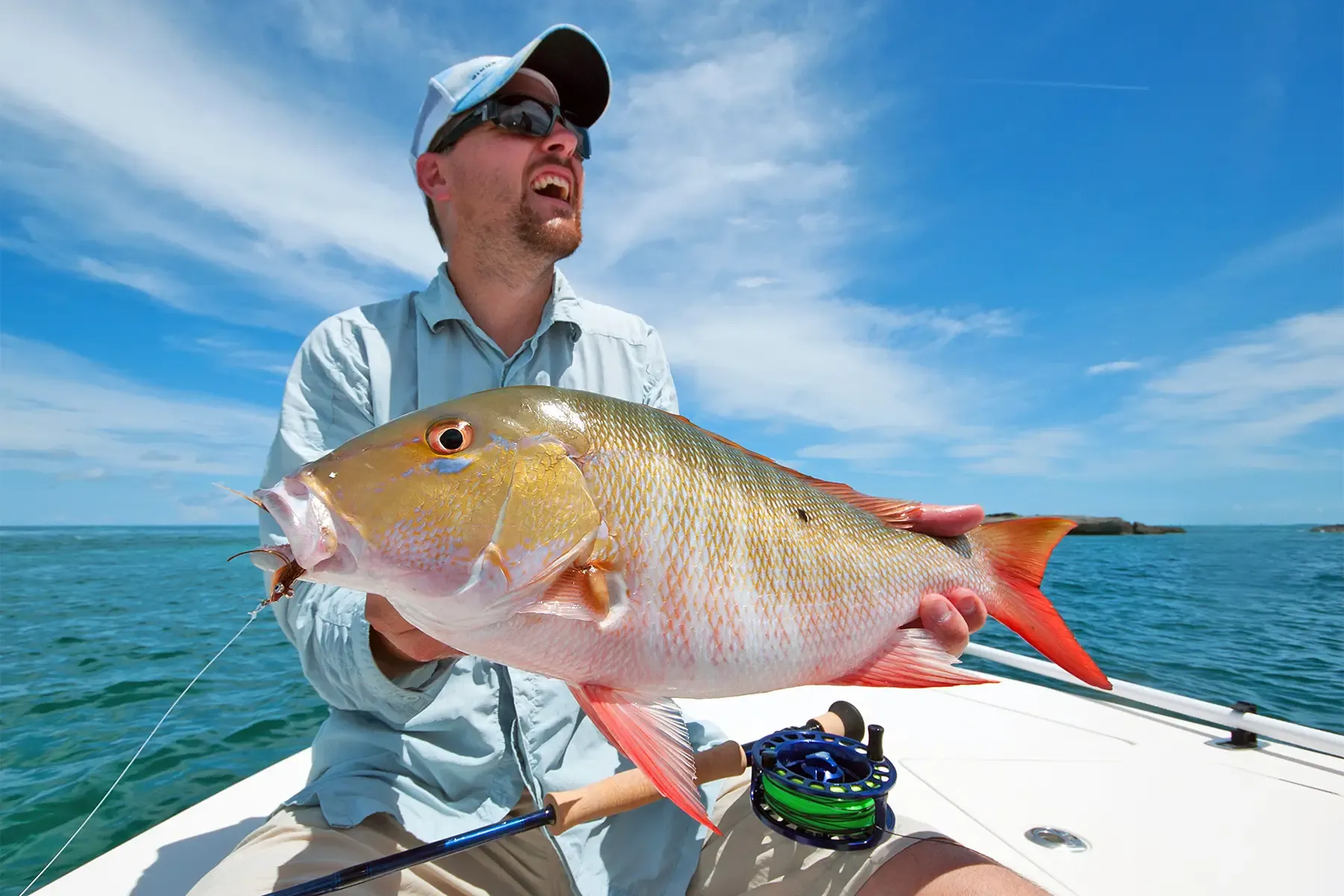
Mutton snapper
are the primary reef target: hard fighters on light tackle, excellent on the table, and present year-round along the reef structure. Cubera and yellowtail snapper fill out the scorecard on most reef days.
Grouper
hold on the deeper reef sections and ledges. They are aggressive ambush feeders that pull hard on the way up. Patient bottom fishing in the right depth produces them consistently.
Barracuda
cruise the reef edge at all depths. They hit fast, run clean, and are good sport on anything light enough to feel the strike.
When to Fish in San Pedro
Timing depends on what you are chasing. Reef fishing has no strong seasonal peak and holds year-round regardless of conditions.
| Species | Peak Season | Notes |
|---|---|---|
| Bonefish | October – April | Year-round; most consistent in cooler months |
| Permit | March – September | Cold fronts December–February disrupt flats conditions |
| Tarpon | April – June | Migration peak; lagoon fish present year-round |
| Reef species | Year-round | No seasonal peak; consistent throughout |
| Wahoo / Dorado | Year-round | Offshore light tackle; most productive spring–summer |
April and May offer the best combination of stable weather, permit in numbers, and long fishing days. Winter fronts from December to February can lock down the flats for days at a time, though reef fishing continues regardless. For a full breakdown of seasonal windows across all of Belize's fisheries, see the guide to fishing in Belize.
Getting to San Pedro and on the Water
San Pedro is one of the most accessible destinations in Belize. A 30-minute water taxi from Belize City runs regularly throughout the day; a 15-minute domestic flight on Tropic Air or Maya Island Air gets you there faster. No long transit, no unpaved roads. You step off the boat or the plane and the flats are a short run in either direction.
Flats charters launch before sunrise to catch the first tidal window of the morning, running one or two anglers per skiff. Reef fishing runs at a more relaxed pace and works as a half day or a full day depending on how much water you want to cover. For anglers who want a day offshore, wahoo and dorado are available in the open water beyond the reef — see deep sea fishing in Belize for the full offshore picture. A multi-day itinerary combining flats, reef, and offshore is manageable from San Pedro without changing base.
Tackle and licensing are handled by the operator. Polarized glasses are the one thing you bring yourself if you are fishing the flats.
What Anglers Say
Staying in San Pedro made the entire trip simple. We were on productive flats within minutes each morning, which meant more actual fishing time and less travel. I had multiple shots at permit and landed several bonefish during a single day trip. Perfect setup if you want serious flats fishing while still enjoying the restaurants and atmosphere in town afterward.
Emily S.
Denver, Colorado, USA
My guide out of San Pedro worked incredibly hard all day and consistently found fish despite changing conditions. The accessibility was what impressed me most. Breakfast in town, permit fishing before most people finished their coffee. It's hard to beat that combination.
Nicolas G.
Montreal, Canada
If you want to put together an itinerary, whether that is a single type of fishing or a combination across several days, get in touch below.
Frequently Asked Questions
Yes. San Pedro sits inside the Mesoamerican Barrier Reef, with permit and bonefish flats a short run from the dock in multiple directions, tarpon in the lagoon channels year-round, and the reef accessible the same morning. It is Belize's most visited island and its most productive fly fishing base. Very few destinations in the Caribbean put that range of water within reach of the same dock.
December through February carries the highest risk of disrupted flats conditions. Cold fronts push through during those months and can cloud the water for several days at a time, making permit and bonefish fishing difficult or impossible when they hit. Reef fishing holds through any weather, so a trip in that window still has options. If permit on a fly rod is your primary goal, spring is the more reliable window.
Yes. A valid Belize fishing license is required for all recreational fishing in Belizean waters. On a guided charter with us, the license is included in the price for every angler on the boat. You do not need to arrange it separately.
San Pedro is one of the safer tourist destinations in Belize. The island is compact, walkable, and well-established as an international destination with a long history of visiting anglers and divers. Most of the island is navigable on foot or by golf cart. Standard common-sense precautions apply, as they would in any unfamiliar location.